
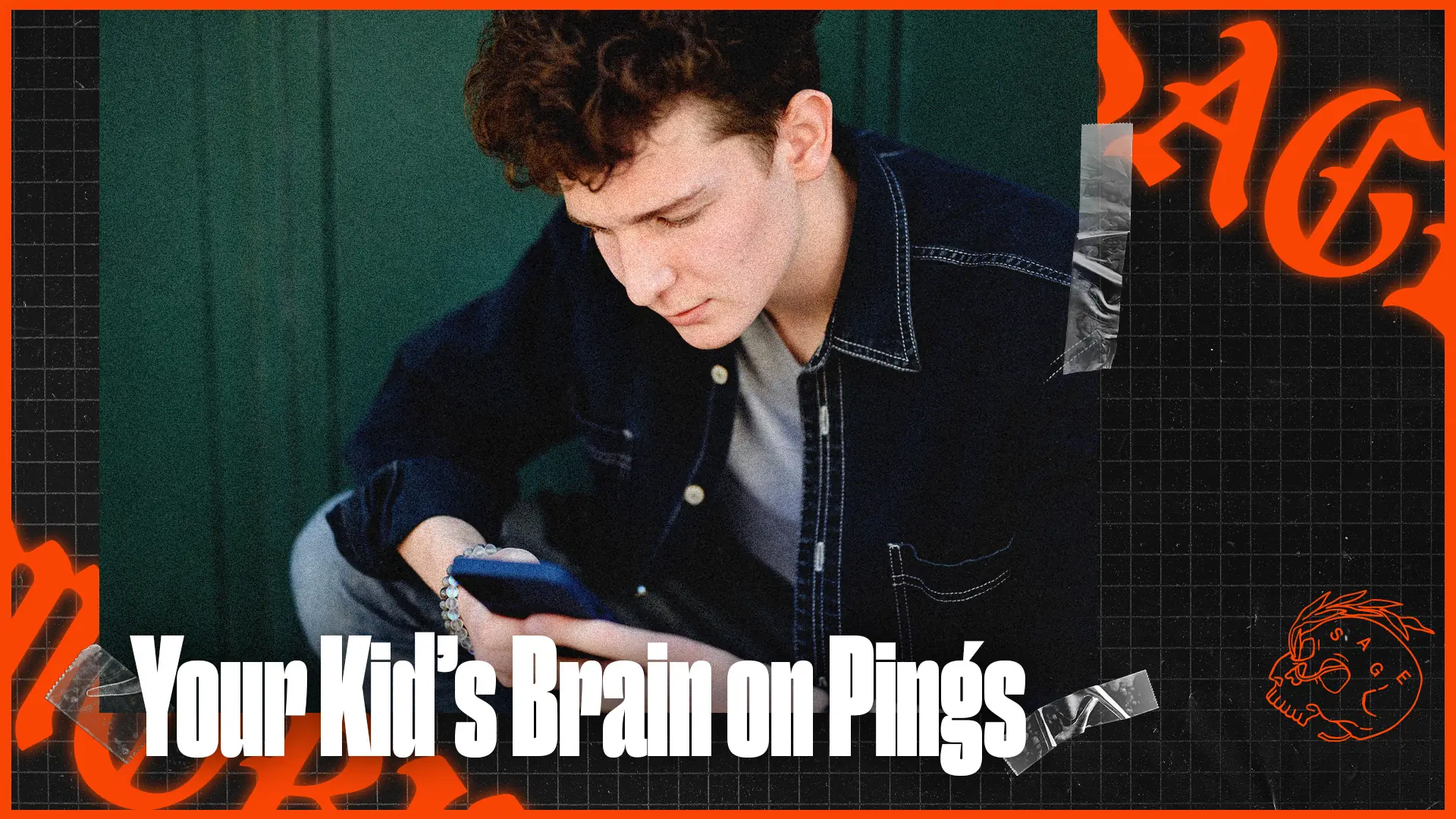
What Constant Notifications Are Doing to Their Focus (and How to Take the Power Back)
Every ping hits like a sugar rush. A quick buzz. A jolt of dopamine. And just like that, your kid’s attention is hijacked.
The average adult now spends 7.5 hours a day on screens, with phone time beating TV for the first time. The majority spend more than 3 hours a day on their phones. If that’s where the adults are, guess where the kids are heading.
The Digital Candy Loop
Phones are the new sugar. You get a hit. You feel great. Then you crash, and go back for more. Every ding, ping, and “like” fires up dopamine—the same reward chemical that kicks in when you eat sugar or gamble.
And here’s the kicker: the more often those pings hit, the duller the brain’s reward response becomes. It’s like emotional junk food: addictive, empty, and engineered to keep you hooked.
Kids aren’t immune. In fact, they’re the main target of Big Tech. Notifications are literally designed to bypass self-control and demand attention.
The Science: How Pings Rewire Kids’ Brains
A UK Parliament report found that children’s screen time has jumped 52% since 2020, and one in four young people now shows behaviour consistent with screen-based addiction. Research shows that social media notifications trigger the same neural pathways as sugar and certain drugs. That’s the level of chemical pull we’re talking about!
Neuroscientists are blunt about it: constant notifications train the brain to crave stimulation, and weaken the parts responsible for focus, emotional regulation, and decision-making. And large-scale brain-scan studies reveal that kids who spend hours on screens show weaker connections in areas linked to attention and impulse control, a kind of mental insulin resistance.
It’s like building muscle, but in reverse. Every ping flexes distraction. Every silence feels unbearable.
The Reset: What Happens When You Finally Shut It Off
Here’s the good news: brains recover fast. A 2025 study found that cutting smartphone use to under two hours a day improved sleep, mood, and focus in just three weeks.
The first few days might feel weird. You’ll probably reach for your phone out of habit. Then, slowly, calm creeps in. Thoughts stretch out. You remember what it feels like to be bored—and it’s not bad!
It’s like a dopamine detox for the soul. Less ping. More peace.
Rebel Parent Moves: Reclaim the Silence
Make a commitment to mute the noise, and turn off all non-essential notifications for one full day. Reclaim family time by making school runs, meals, and bedtime no-ping zones. And show your kid how it’s done. If they see you reach for connection instead of your phone, that’s a lesson that will stick.
Swap screen time for real time. Walk, play, talk—anything that helps remind their brain what human presence feels like.
The Sage Mobile Takeaway
Big Tech built a world where your attention is the product, and your kid’s brain is the prize. Rebel Parents don’t play that game. We teach our kids to recognise the trap, feel the pull, and choose differently.
So go on. Silence the pings. Step into Human Mode.
Take the “Day Without Pings” Pledge with your kid. You both deserve a brain that belongs to you.
Take the “Day Without Pings” Pledge and you’ll receive our free “Day Without Pings Challenge Tracker” to help you stay the course.